
When the Scenery Changes, So Do Your Clothes: Tokyo's Four Seasons and What to Wear for a Street Kart Tour
When the Scenery Changes, So Do Your Clothes: Tokyo's Four Seasons and What to Wear for a Street Kart Tour
In Tokyo, you can see the seasons change just by looking out the window. In spring, the zelkova trees along Omotesando turn green. In autumn they go yellow, and in winter the wind off the bay turns cold. Picking which season to come and which route to ride through all of that is part of the fun of the trip.
People coming to Japan for the first time often worry that their clothes will be wrong for the weather when they arrive. That's a fair worry. This article goes through the seasons one at a time: what you'll see in Tokyo and how it feels on your body. Along the way, it explains how to choose clothes for a day on a street kart. One rule comes first, though. Don't base your outfit on how the scenery looks. Base it on the weather forecast for the day, your departure time, and the wind you'll feel while driving.
Why Layering Helps on a Tokyo Kart Tour
Many cities in Brazil don't change much from season to season, but Tokyo has four distinct seasons. When one season turns into the next, hot days and chilly days can alternate within the same week. If you pick your clothes from the forecast numbers alone, you'll often get it wrong.
There's one more local habit worth knowing if it's your first time in Japan. Air conditioning inside Tokyo's buildings and trains is fairly strong. In summer the cooling is so strong that it can feel like a different season from the one outside. In winter the heating can make you too warm. That's why the standard approach in Tokyo is layering. Instead of one heavy piece, wear several thin layers and take them off or put them on as you move from place to place.
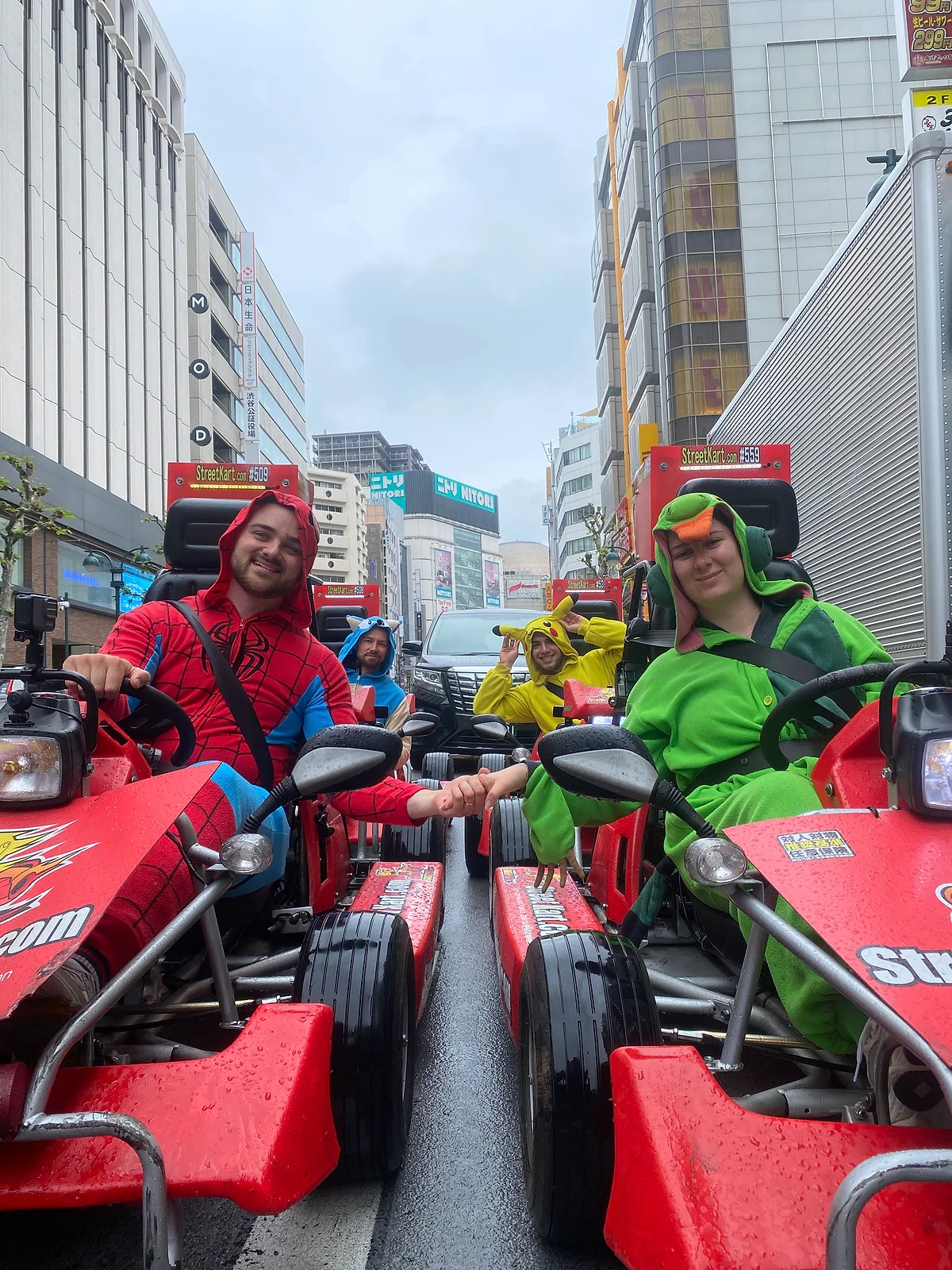
It's worth explaining once what kind of vehicle a street kart is. A kart has no roof. The seat is low, and your body sits close to the road. The wind hits you head-on, and the sounds of the city, the sunlight, and the heat rising off the pavement all reach you directly. You feel the season much more closely than you do walking around as a tourist, and that is the best part of riding a street kart. So choose your clothes based on how your body will feel while you're driving.
Each store has its own set route, and a staff guide drives at the front. You can't head off wherever you like. On the other hand, once you choose a store, you'll have a good idea of the scenery you'll drive through. Tokyo has seven stores. In the Shibuya area and the Akihabara area, two stores sit in almost the same spot. The sections below cover the scenery you'll see on the routes in each season, and how to dress for that season's weather and wind.
Spring: Fresh Zelkova Leaves and Bay Breezes. Be Ready for Both Sun and Wind
Spring is the season when Tokyo gets a little brighter every day. On Omotesando, which the Shibuya store's tour passes through, young green leaves fill the branches of the zelkova trees, and that green shows up in the glass of the distinctive buildings designed by well-known architects. At the entrance to Takeshita Street in Harajuku, the colorful shops look even more vivid in the spring light. Driving a kart through all this color feels wonderful. If you work in design, Tokyo's colors at this time of year are worth seeing.
Spring weather can fool you, though, because it looks warmer than it is. Even when it's warm in the sun, the wind cools you down once you're driving. On bayside routes like those from the Tokyo Bay and Shinagawa stores, the sea breeze can still be cold on some days. Once the sun starts to go down, the temperature can drop quickly.
For spring, we recommend a thin long-sleeved top with a light jacket over it that you can zip open or closed. Open it when you're warm and close it when you're cold. That alone is enough to adjust. Spring is also pollen season in Tokyo, so if you're sensitive to pollen, bring a mask or some eye drops from a pharmacy. You'll see plenty of people wearing masks in Japan. It's a normal way to deal with colds and pollen, so wearing one won't make you stand out.
Summer: Heat Off the Pavement and the Lights of Rainbow Bridge. Handling Heat and Sudden Rain
Tokyo summers are hot and very humid. If it's your first visit, it may feel more humid than you expected. The heat also lasts for a while after summer officially ends. It's not unusual for midsummer-like days to continue well into September. If you dress for autumn because "it's September now," you'll have a hard time.
On a summer kart ride, watch out for two things: the sun from above, and the heat reflecting up off the pavement to your low seat. Bright-colored clothes made of fabric that dries sweat quickly work best. If you show too much skin, you'll be nursing a painful sunburn that night. A thin long-sleeved top or sunscreen is a good way to block the sun. Drink plenty of water before the tour. Every store has a convenience store (a small Japanese supermarket) nearby where you can buy drinks, body wipes, and sunscreen.
The highlight of summer is Rainbow Bridge, which you can see from the Tokyo Bay and Shinagawa store routes. It's a 798-meter suspension bridge over Tokyo Bay, and at night it lights up in seven colors. On a summer night, with the humid sea breeze around you, it's a sight you won't forget. It usually stays humid even after sunset, so light clothes are fine for summer evening tours too. Still, a thin extra layer is handy in case the air conditioning chills you once you go indoors.
During the rainy season and in summer, heavy rain can come on suddenly. The stores provide raincoats free of charge, so you don't need to bring your own. Check the official website (kart.st) in advance to see whether tours run in the rain and how weather-related changes are handled. Choose clothes that don't get heavy when wet and that dry quickly. That way you'll stay comfortable after the tour as well.
Autumn: Yellowing Trees and Clear Skies. Peak Season for Layering
Once the heat finally ends, Tokyo slowly turns softer and more muted in color. The leaves of the zelkova trees on Omotesando start to change, and the air gets drier, so you can see much farther. On the Tokyo Bay store route, you can see the red and white of the 333-meter Tokyo Tower. On a clear day its outline stands out sharply, and it's beautiful. If you're with friends who love photography, swapping photos after the tour is guaranteed to be fun.
The key to dressing for autumn is the temperature difference between midday and evening. Even when a T-shirt is enough in the sun, the wind on a kart will make you feel chilly. The days get shorter, so on an evening tour it gets dark quickly and the air turns cold.
This season, we recommend three layers: a T-shirt, a thin knit sweater or sweatshirt, and a light windproof jacket. With three layers, you can handle the warm sun, the bayside wind, and the chill after sundown. The stores have lockers for small items, but if you want to know how to store clothes you take off, ask the store in advance.
The Akihabara store's tour passes historic buildings such as the red-brick Marunouchi building of Tokyo Station and the Ginza 4-chome intersection with the Wako clock tower. In soft autumn light, the red brick looks different from how it looks in summer, and just as good. If you pick a jacket in a muted color, it will also match the city's colors in your photos.
Winter: Illuminations and Cold Sea Winds. Protect Your Fingers and Neck
Tokyo winters bring lots of sunny days and dry air. It's cold, but the sky is blue, and the city lights look beautiful. The zelkova trees on Omotesando are known for their winter illuminations. In Akihabara's Electric Town, the glowing signs look even brighter in the clear winter air. On winter nights, sounds and lights come through sharp and clear. Driving a kart through all of that is something you can only enjoy in winter.
But a winter kart ride gets colder than you'd think. While you're driving, it feels much colder than the temperature reading says. On the bayside routes from the Tokyo Bay and Shinagawa stores, the sea wind hits you the whole way.
Your fingertips, neck, and ears get cold the fastest. For your hands on the steering wheel, choose gloves that let you move your fingers easily. Thick gloves make it hard to steer, so pick thin, windproof ones. For your neck, something like a neck warmer that the wind won't blow around is a safe choice. A long scarf can come loose and flap as you drive, so wrap it short or wear something else.
One more handy item for Japanese winters is the disposable hand warmer, known as kairo. It's a small pack that heats up when you open the package, and you can buy one at convenience stores and drugstores. Tuck one inside your clothes to stay warm before and after the tour and while you wait. Many visitors haven't used them before, but they really help in a Tokyo winter.
On the other hand, cafés and trains are heated, so they'll be warm before and after the tour. Rather than one thick coat, the best choice is layers: an inner layer, a fleece, and a windproof outer jacket. Take them off indoors and wear all of them on the kart.
Clothing Basics for Kart Day, in Any Season
Some advice applies no matter the season. The seat is low, and you'll lift and lower your legs a lot getting in and out, so pants you can move in easily are the comfortable choice. Skirts and loose, wide-hemmed clothes flap in the wind and can distract you on an unfamiliar vehicle. For shoes, closed-toe sneakers or something similar work best. Avoid sandals that slip off easily and heels.
Hats blow off easily in the wind, so ask the staff on the day whether you can wear one while driving. Decide before you set off where you'll keep your phone and wallet, too. Holding your phone while driving is dangerous, so clothes with zippered pockets are a good idea. Dress code rules and what to bring can change, so check the official website for the latest information.
To drive, you need a driver's license that is valid in Japan. Check your own license against the official driver's license page to see which countries' licenses are accepted and whether you need an International Driving Permit. Even a perfect outfit won't help if your license doesn't meet the requirements, because you won't be able to join. Put this at the very top of your travel checklist.
Why Street Kart: Driving Through Tokyo's Seasons With a Guide
That covers the clothes. Here's a little about what makes Street Kart itself worth it, which should also show why it's worth preparing for the season.
First, its track record. As of November 2023, all stores combined had run more than 150,000 tours for more than 1.34 million customers, with more than 20,000 reviews and an average rating of 4.9 out of 5.
Second, you get to share the same scenery with your friends. You drive one behind the other, stop at the same lights, and feel the same wind. All of it, right down to asking each other "Did you see that bridge?" after the tour, becomes a great memory.
Getting Ready: From Booking to Tour Day
For first-timers, here's how to get ready, step by step. First, choose a store based on the season you want to ride in and the scenery you want to see. For bay breezes and bridges, go with the Tokyo Bay or Shinagawa store. For tree-lined streets and fashion districts, choose the Shibuya store. For historic buildings and Electric Town, pick the Akihabara store. Next, check the official driver's license page to confirm that your license lets you take part.
You can book through Facebook, LINE, or email (booking@streetkart.com). Weekends fill up quickly, so get in touch early once your dates are set. Prices vary by season and time of day, so check the official website (kart.st) for current prices. Tour length and departure times also differ by store and plan, so confirming them when you book makes it easier to plan your day. Tours are generally guided in English. Whether guidance is available in Japanese or other languages depends on the staff that day, so it can't be guaranteed. The website, however, is available in 22 languages.
The night before, check the weather forecast and settle on your outfit. As this article has explained, decide how many layers to wear based on that day's forecast, your departure time, and the wind you'll feel while driving. On the day, take public transportation to the store, because the stores don't have parking. By train, it's easier to predict your travel time, and you'll have time to stop at a convenience store for drinks or hand warmers on the way.
What Colors Will Tokyo Show You Next Season?
Fresh spring green. A bridge glowing on a summer night. Clear autumn skies and red brick. Winter illuminations. Tokyo looks completely different from one season to the next. Picture that scenery when you choose which season to come and which store's route to ride. For your clothes, decide based on the day's weather forecast, your departure time, and the wind you'll feel while driving. That will tell you how warm a jacket you need and whether to bring gloves.
Once your travel dates are set, start by checking the stores and participation requirements at kart.st. Then contact them through Facebook, LINE, or email to book, and you're almost ready. Dress for the season, follow your guide, and head out into the Tokyo wind. You'll feel every change in the scenery with your whole body, and it's a lot of fun!
This article was originally written in Japanese and translated using AI. Some expressions may read unnaturally, and we appreciate your understanding. For the most accurate and up-to-date information, please refer to the official site at kart.st.
Street Kart is not affiliated with Nintendo or the Mario Kart series in any way. We do not provide costumes of Nintendo characters, and such costumes may not be worn during tours even if brought by participants.