
Before You Ride a Street Kart in Tokyo: How to Read the Safety Rules and Avoid Common Pitfalls
Before You Ride a Street Kart in Tokyo: How to Read the Safety Rules and Avoid Common Pitfalls
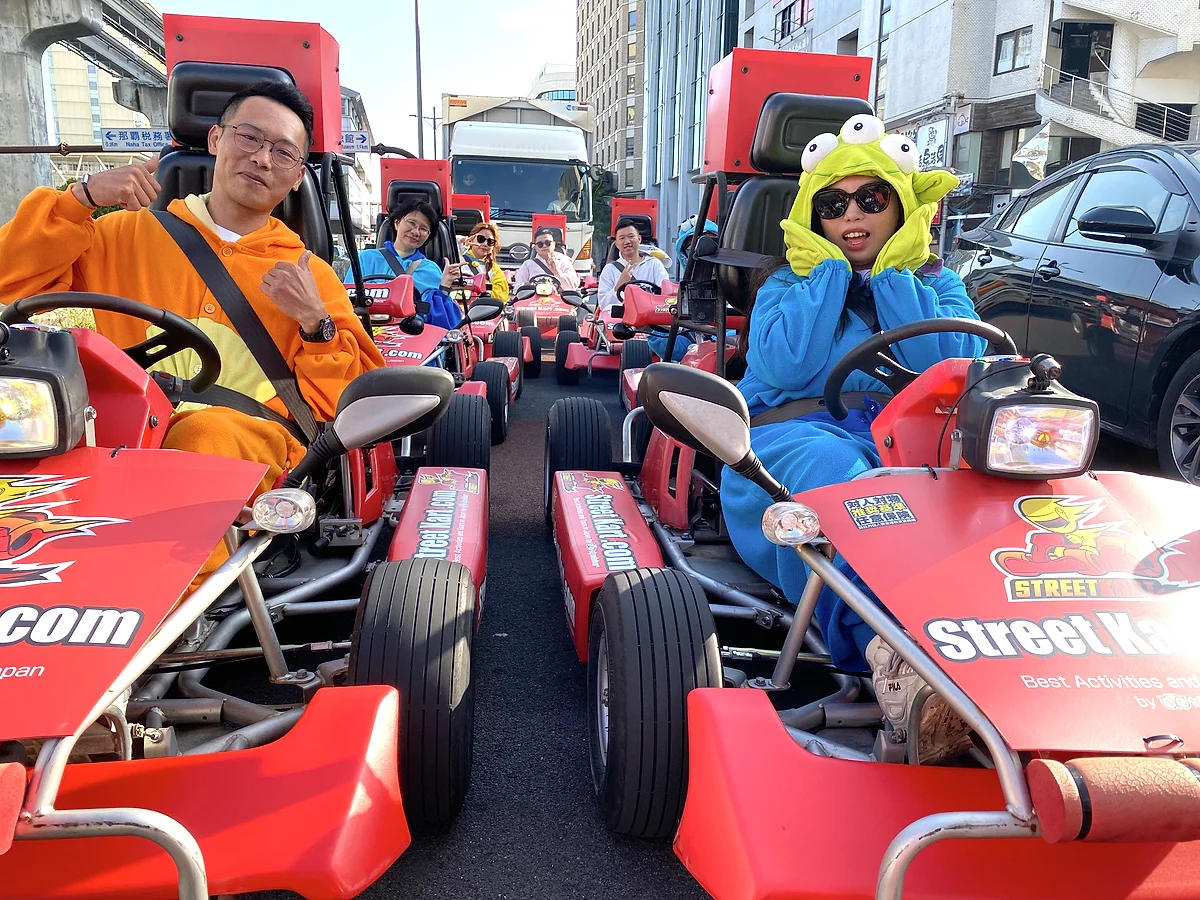
The light turns green. The guide's kart in front of you starts moving slowly, and a few more karts follow in a single line. You feel the engine's vibration through the seat and up your back, and a wide Tokyo avenue stretches straight ahead of you.
Whether you can ease into this scene with confidence depends a lot on how well you know the rules before you ride. It's your first time in Japan, you're driving on unfamiliar streets in a city you don't know, and you're in a vehicle you've never driven. Feeling nervous is completely natural. So in this article, we'll go through the Street Kart safety rules one at a time, looking first at where people tend to slip up and then at how to avoid it.
Read each rule together with the reason behind it
When you open the rules, you'll usually see a long list of "Please do not..." items. The mistake is skimming all of them as if they were equally important. If you do that, by the time the day of your tour arrives, you won't remember which ones actually mattered.
The trick is simple: attach a "why?" to each rule as you read it. Street Karts don't run on a racetrack. They run on real public roads, right next to buses, taxis, and bicycles. You sit in a low, open seat with no roof, so you feel the wind and the sounds of the city directly, and the vehicles around you look much bigger than usual. If you start with the idea that you'll be driving in regular traffic, most of the rules will make sense right away.
The dress code is easier to understand from this angle too. The materials recommend closed-toe shoes (sneakers are best) and clothes you can move in easily. They say to avoid open-toed shoes like sandals, heels, skirts or dresses, and expensive clothing. You sit in a low seat, press the pedals with your feet, and face the wind the whole time, so the reasons are easy to picture. Travelers often pack only nice shoes, so decide on your footwear the night before to avoid a scramble in the morning. Everyone is required to wear a helmet, and helmets and goggles are provided free of charge. Also, the karts have no suspension and you'll feel every bump in the road, so riding is not recommended for people who are pregnant. If you're unsure, check with your doctor.
There are two points about Japanese roads worth mentioning once, right at the start. First, Japan drives on the left. If you usually drive in a country that drives on the right, your body may try to steer you into the opposite lane when you turn at an intersection. Second, drunk driving is illegal in Japan. Street Karts are road vehicles too, and "just one drink" is not okay. Save the drinks for after your ride. Your celebratory toast will taste better that way anyway.
Three things that trip people up before booking
The first is your driver's license, and a mistake here can't be fixed on the day. Some people come to Japan thinking, "I drive at home, so I'll be fine," and only find out on the day that they can't ride with the license they have. According to the materials, if you don't bring the required original license on the day, you can't take part, and you won't get a refund. That would be a real shame. Which licenses are accepted and what you need to bring depend on your home country and the type of license you hold. Before you book, check your own situation on the official driver's license page. The key is to read it before you book, not after. If you check when you book your flights, you'll have time to get everything ready before you leave.
The second is when you book. Weekends fill up quickly, so it's best to reserve early. If you wait until your travel plans are set and then look in the last few days, your preferred date may already be taken. Reservations are accepted via Facebook, LINE, and email; check the official website for contact details. If you want to ride on a weekend, booking early will make things much less stressful.
The third is the language of the tour. Tours are generally guided in English. Whether guidance is available in Japanese or other languages depends on the staff working that day, so it can't be guaranteed. If you're not confident in your English, you might worry about missing something important. But you can prepare. The Street Kart website is available in 22 languages, so it's a good idea to read through it once before you go. If you already know the content, it'll be easier to follow the English explanations on the day. If you have questions about language, ask when you book, but keep in mind that the language on the day still depends on the staff. With a smile, some gestures, and a bit of reading ahead of time, you'll feel a lot more confident.
Common mistakes on the day, from getting to the shop to driving
Once your booking is confirmed, it's time to think about the day itself. Below, we'll look at the common pitfalls in three situations.
Driving to the shop
The shops don't have parking. Please use the train or other public transportation.
Knowing how far each shop is from the station makes the day easier to plan. For example, the Shibuya shop is a 5-minute walk from Shinsen Station on the Keio Inokashira Line, or a 10-minute walk from Shibuya Station. The Tokyo Bay shop is an 8-minute walk from Shin-Kiba Station, which is served by the JR Keiyo Line, the Tokyo Metro Yurakucho Line, and the Rinkai Line. The Shinagawa shop is a 3-minute walk from Kita-Shinagawa Station on the Keikyu Main Line, or a 10-minute walk from Shinagawa Station.
Tokyo's major stations have many exits, and it's easy to get lost inside them. At both Shibuya and Shinagawa stations, getting through the ticket gates can take longer than you'd expect if you're not used to them. Add some extra time for walking inside the station to the walking time your map app shows, and you'll get to the shop without rushing.
There's also a rule about arrival time. According to the materials, you need to arrive at the shop at least 15 minutes before departure for check-in and the safety briefing. The briefing covers how to operate the kart, the route, and important precautions. If you miss it, you'll find yourself wondering "What did they say again?" once you're on the road. Allow for possible trouble with train transfers and leave with plenty of time to spare.
Luggage is another thing people often forget about. The shops have lockers for small items, but they aren't suitable for large bags like suitcases. If you plan to go straight to the shop after checking out of your hotel, decide in advance where you'll keep your large luggage. Leaving it at your hotel, for example, so you can arrive with only light bags will make the day much easier.
Assuming you can drive wherever you like
This is a trap that the most excited riders tend to fall into. Street Kart is a tour led by a guide who drives at the front. The guide controls the route, and you don't choose where to go yourself. The karts are single-seaters, so you can't take a passenger. For questions about how the tour is run, such as how groups are organized, please check the official website.
You're not allowed to let anyone else, such as a friend, drive your rental kart. That includes letting a friend who didn't bring a license take over "just for a minute." Only the person whose license was checked at reception may drive. Modifying the vehicle or attaching unauthorized equipment is also prohibited. If you want to mount something like a camera on the kart, don't attach it yourself; check with the shop beforehand.
In return, some truly impressive scenery awaits. The routes from the Shibuya shop and Shibuya ANNEX pass places like the Shibuya Scramble Crossing, the zelkova-lined avenue of Omotesando, and Takeshita Street in Harajuku. From the two Akihabara shops, you'll see Akihabara Electric Town, the red-brick Marunouchi building of Tokyo Station, and Ginza. From the Tokyo Bay shop, the views include the 798-meter Rainbow Bridge spanning Tokyo Bay and the 333-meter Tokyo Tower. Looking up at any of these from the low seat of a kart feels very different from seeing them in photos.
There are seven shops in Tokyo. Akihabara Shops 1 and 2 are in almost the same place, and so are the Shibuya shop and Shibuya ANNEX, so they don't cover seven separate areas. Even so, you can choose from routes with different scenery: the Bay Area, Shibuya, Akihabara, and Shinagawa. Pick a shop based on where you're staying and where else you want to go before or after. As of November 2023, the shops had run more than 150,000 tours in total, with more than 1.34 million customers and over 20,000 reviews, and an average rating of 4.9 out of 5.
If there are other places you want to visit, plan them for before or after your tour. Meiji Jingu is about a 20-minute walk from the Shibuya shop, Shinagawa Shrine is about 5 minutes from the Shinagawa shop, and Kanda Myojin is about 10 minutes from Akihabara. If you plan your driving time and your walking time separately, your day will come together nicely.
Using your phone while driving
When the Shibuya Scramble Crossing comes into view, you'll want to take a photo, and that's completely understandable. But using your phone while driving is dangerous. In the moment you take your hand off the wheel, the gap to the kart ahead can close or the light can change. The tour includes stops at photo spots. Check ahead of time what is and isn't allowed for taking photos.
The rules while driving are clear: follow Japanese traffic laws, follow the guide's instructions, keep to a safe speed, keep a safe distance from the vehicle ahead, and obey traffic lights and signs. Don't leave the line on your own; focus on the kart in front of you and the guide's signals. When you know exactly what you need to do, it's easier to stay calm.
Traffic lights and driving on the left deserve one more reminder. People used to driving on the right can easily slip up when turning at intersections. Use the path of the kart ahead as a guide, but also check the lights, signs, and surrounding traffic yourself.
There's also a set procedure in case of a collision or accident. First, tell the guide right away. After that, the police and insurance company will be contacted. Don't settle the matter privately with the other party; any settlement requires the shop's permission. If you panic at the scene, you may feel pressured to go along with whatever the other person says. But if you just remember "tell the guide first," you'll know what to do next. Also keep in mind that reckless driving may void your insurance coverage.
Knowing about the weather policy ahead of time will also make decisions on the day easier. In light to moderate rain, tours go ahead as planned, and raincoats are provided free of charge. In heavy rain or typhoons, tours are canceled, and longer courses may be shortened. If your tour is canceled, you can choose between a shortened tour with a refund of the difference, changing to another day, or canceling for a full refund. Roads get slippery in the rain, so leave more space than usual between you and the kart ahead.
Do these things before you go, and most of your worries will disappear
Everything we've covered comes down to just three actions.
First, check the license requirements before you book. Second, book early and read through the precautions on the official website once. Third, on the day, take the train to the shop with plenty of time to spare, and follow the guide while you're driving.
Check your belongings the night before, too. According to the materials, you must bring your original driver's license, your passport for identity verification, and your booking confirmation email or reservation number. Digital driver's licenses are not accepted; you need the original physical card. To be safe, check once more on the official driver's license page what your particular license requires. Put everything together with your wallet and phone near the front door so you don't forget anything.
Once you've taken care of these three things, the feeling of "I don't know what's going to happen" should be much smaller. Spend all that extra headspace on the scenery: neon signs flowing past on the streets of Shibuya, the breeze as you cross the bay, the moment you drive past the red-brick station building. You'll see Tokyo from a completely different height than usual, and it's a lot of fun.
Booking information, details for each shop, and the latest updates are all on the Street Kart official website. If you want to ride on a weekend, start by choosing your date and booking early. If you know the rules before you take the wheel, you can enjoy the city from the moment you set off.
This article was originally written in Japanese and translated using AI. Some expressions may read unnaturally, and we appreciate your understanding. For the most accurate and up-to-date information, please refer to the official site at kart.st.
Street Kart is not affiliated with Nintendo or the Mario Kart series in any way. We do not provide costumes of Nintendo characters, and such costumes may not be worn during tours even if brought by participants.