

A 2-Night, 3-Day Weekend Trip to Tokyo — A Hands-On Plan to Soak Up the City’s Depth in 48 Hours
You touch down at Haneda Airport on Friday night and catch your flight home by Sunday evening. Just 48 hours. How much of Tokyo’s endlessly layered personality can you actually absorb in such a tight window? Here’s the thing — that time crunch is exactly what sharpens the whole experience. The act of cutting through infinite options to zero in on what you truly want to see is itself the first step toward grasping what Tokyo is really about. Unlike European cities, Tokyo is a single metropolis where the vibe shifts completely within just a few train stops — Shibuya, Asakusa, Akihabara — each one a different world. To make the most of that wild diversity, here’s a plan designed to squeeze every drop out of a 2-night, 3-day weekend getaway.
Day 1 — From Arrival to Tokyo After Dark: Flipping the Switch
One thing people tend to overlook on a 2-night, 3-day Tokyo trip is how they spend that first evening. Once you’ve dropped your bags at the hotel, head straight to Shibuya’s Scramble Crossing. There’s a solid reason to hit Shibuya at night — the neon lights and waves of people colliding in that intersection hit differently after dark, with an overwhelming presence you just can’t replicate in daylight. Grab a seat at a café overlooking the crossing, and watch as hundreds of people surge forward the instant the light turns green. Compared to the orderly crosswalks of Germany, it’s a beautiful chaos — no choreography, yet somehow a perfect rhythm emerges. For dinner, make your way to Omoide Yokocho in Shinjuku. The smoke drifting through narrow alleyways and the savory aroma of yakitori grilling will be your first full-sensory download of Tokyo.
Day 2 — Tasting Tokyo’s “Motion” and “Stillness” in a Single Day
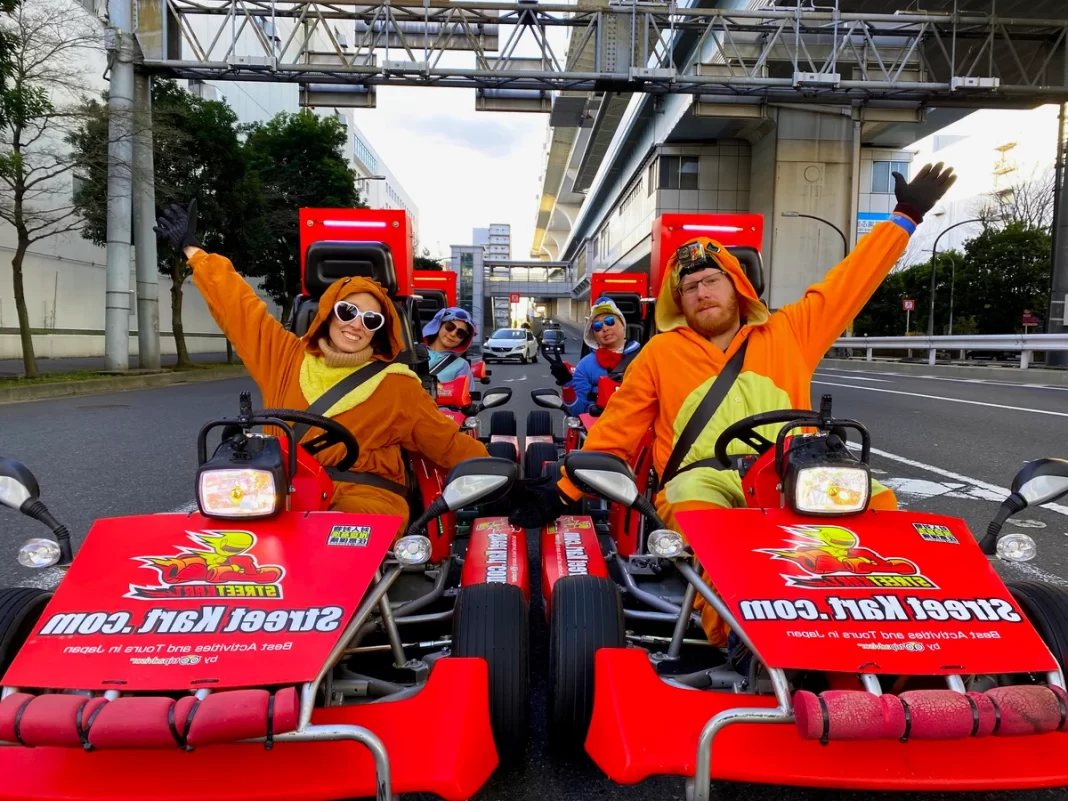
Day two is the highlight of this weekend adventure. Start your morning at Kaminarimon Gate in Asakusa. Walking along Nakamise-dori, you’ll notice the spirit of Edo-era commerce is still alive and kicking. Inside the Senso-ji temple grounds, incense smoke drifts through the morning light while international tourists and local worshippers blend together naturally. Dig into the history and you’ll find this temple was founded in 628 AD — it’s been a spiritual anchor for Tokyo for roughly 1,400 years. For the afternoon, seriously consider booking a street kart experience. Street Kart offers guide-led tours where you hop into a go-kart and cruise actual public roads, experiencing Tokyo’s streetscape from ground level. The smells of the city, the temperature of the wind, the vibration of the asphalt — none of that comes through on foot or by train. It paints a completely different picture of Tokyo.
Why Street Kart Stands Out
What makes Street Kart special starts with their guide-led tour format, where experienced guides ride at the front of the group. It’s designed so even first-timers can relax and enjoy the ride. With over 150,000 tours completed, more than 1.34 million total customers, and an average rating of 4.9 out of 5.0, the numbers speak for themselves.
Their website supports 22 languages, and the actual service is delivered in English. As the industry’s first kart operator to deploy guides specifically trained for international drivers, you can dive into the experience without worrying about language barriers. With 8 locations across Tokyo, Osaka, and Okinawa and a fleet of over 250 karts, the scale alone inspires confidence. You can even suit up in costumes for the ride, cranking the surreal factor up another notch. Note that Mario Kart-related costumes are not available. Street Kart is a completely independent service with no affiliation to Nintendo or the Mario Kart franchise. For driver’s license requirements, check the details on their official license information page.
For your Day 2 evening, take a stroll through Akihabara’s Electric Town. From a European perspective, Akihabara feels like a living museum where technology and Japanese pop culture are packed into every square meter — just walking around reveals an entire dimension of modern Japan.
Day 3 — Finding Tokyo’s True Essence in the Silence
On your final morning, make your way to the forests of Meiji Shrine. Step through the torii gate from Harajuku Station, and you’ll be stunned that a forest this deep exists right in the heart of Tokyo. The only sound on the gravel-lined approach is the crunch of your own footsteps — a world of silence that couldn’t be more different from the previous day’s kart-fueled rush. When you compare cultural approaches, European cathedrals reach vertically toward the heavens, while Japanese shrines are designed to merge horizontally with nature. Meiji Shrine is where you feel that difference in your bones. Spend your remaining time walking from Omotesando to the Aoyama area, taking in Tokyo’s contemporary architecture and refined café culture. Precisely because time is limited, there’s real meaning in experiencing Tokyo’s duality — “motion” and “stillness,” “tradition” and “modernity” — in concentrated form.
48 Hours in Tokyo Opens the Door to Your Next Trip
A 2-night, 3-day weekend trip is too short to grasp the full scope of Tokyo. But that’s exactly why the impressions hit so hard. The nighttime heat of Shibuya, the weight of history in Asakusa, the wind in your face from the kart, the forest silence of Meiji Shrine — they all stack up as layers within a single trip, etched into your memory. The Street Kart experience in particular is an unmatched way to not just “see” Tokyo but truly “feel” it. Booking is easy at kart.st. Weekend slots fill up fast, so lock it in as soon as your itinerary is set. The Tokyo you see in 48 hours is only a fragment. But that fragment? It’s exactly the reason you’ll come back.
